Archives
- 2026-08
- 2026-07
- 2026-06
- 2026-05
- 2026-04
- 2026-03
- 2026-02
- 2026-01
- 2025-12
- 2025-11
- 2025-10
- 2025-09
- 2025-03
- 2025-02
- 2025-01
- 2024-12
- 2024-11
- 2024-10
- 2024-09
- 2024-08
- 2024-07
- 2024-06
- 2024-05
- 2024-04
- 2024-03
- 2024-02
- 2024-01
- 2023-12
- 2023-11
- 2023-10
- 2023-09
- 2023-08
- 2023-07
- 2023-06
- 2023-05
- 2023-04
- 2023-03
- 2023-02
- 2023-01
- 2022-12
- 2022-11
- 2022-10
- 2022-09
- 2022-08
- 2022-07
- 2022-06
- 2022-05
- 2022-04
- 2022-03
- 2022-02
- 2022-01
- 2021-12
- 2021-11
- 2021-10
- 2021-09
- 2021-08
- 2021-07
- 2021-06
- 2021-05
- 2021-04
- 2021-03
- 2021-02
- 2021-01
- 2020-12
- 2020-11
- 2020-10
- 2020-09
- 2020-08
- 2020-07
- 2020-06
- 2020-05
- 2020-04
- 2020-03
- 2020-02
- 2020-01
- 2019-12
- 2019-11
- 2019-10
- 2019-09
- 2019-08
- 2019-07
- 2019-06
- 2019-05
- 2019-04
- 2018-07
-
EPAC induces SOCS gene expression in VECs resulting
2021-01-07
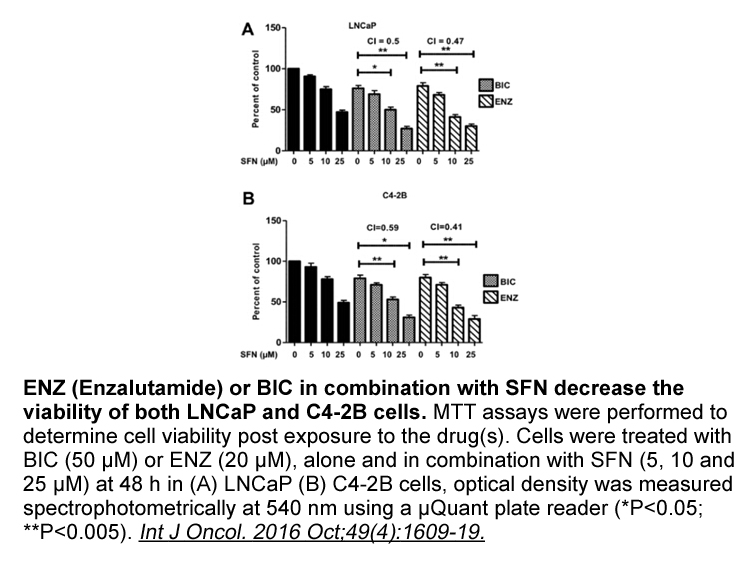
EPAC1 induces SOCS3 gene expression in VECs, resulting in suppression of the JAK–STAT activation initiated by the sIL-6Rα/IL-6 trans-signalling complex [67]. EPAC1 regulates SOCS3 gene induction through the activation of C/EBP and c-Jun transcription factors, which interact directly with the SOCS3 p
-
In conclusion the data suggest
2021-01-07
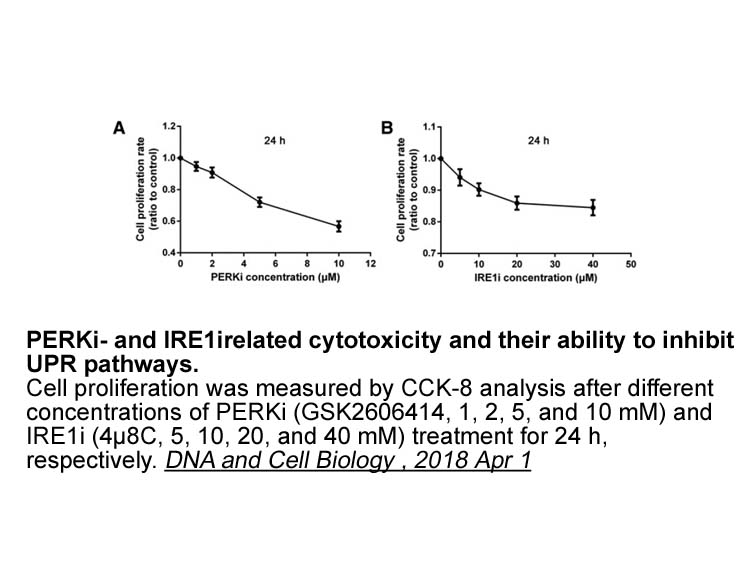
In conclusion, the data suggest that doses of COX-2 inhibitors and EP1 receptor antagonists which have previously been reported to exert disease modulating or antiepileptic drug potentiating effects do not negatively affect seizure control in temporal lobe epilepsy. The contrasting impact of the EP1
-
In the current study we
2021-01-07
In the current study, we have elucidated an intrinsic mechanism by which PD-1 signaling maintains Foxp3 in Tbet+iTreg and iTreg cells. The data presented here demonstrate that PD-1 can inhibit a functional nuclear pool of active asparaginyl endopeptidase (AEP), an endo-lysosomal protease previously
-
Regardless of its effect on EBV infection
2021-01-07

Regardless of its effect on EBV infection, the chemokine system has been found to be regulated in both nasopharyngeal cancer and Hodgkin lymphoma. As such, Hodgkin and Reed–Sternberg (HRS) cells from Hodgkin lymphoma and nasopharyngeal carcinoma cells have been shown to express CXCL8 and CCL17. Furt
-
br Materials and methods br Results br Discussion Ubiquitina
2021-01-07

Materials and methods Results Discussion Ubiquitination is an important eukaryotic process that defines the fate of proteins and their functionality. It has multiple roles in cell survival, differentiation and development (Glickman and Ciechanover, 2002). Ubiquitination is usually known as
-
The possibility that a carboxyl group attached to
2021-01-07
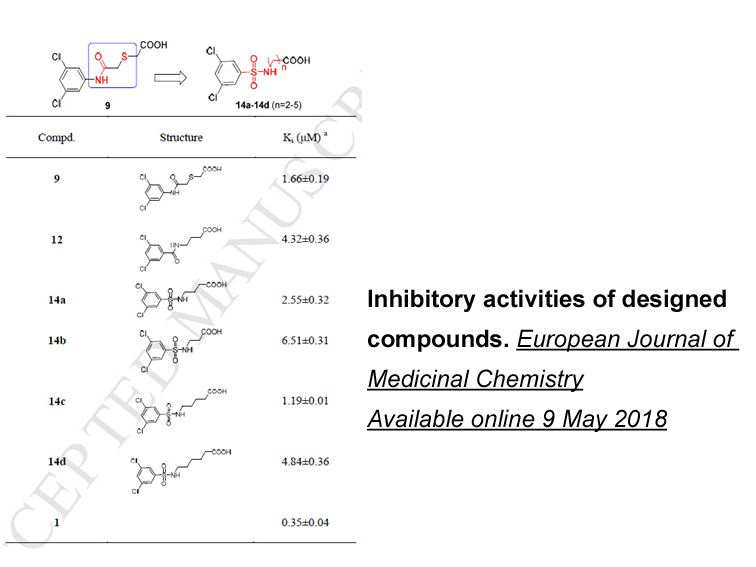
The possibility that a carboxyl group attached to the or position of an -arylaminomethylenemalonate ester would lead to increased selectivity for DHODH has been tested and found not to be the case. Indeed, reduced selectivity compared with the corresponding ester is observed and is attributed to a
-
Multiple sequence alignment of the proteins in
2021-01-07
Multiple sequence alignment of the proteins in the DGAT1 sub-family shows that there are about 41 conserved amino estrone residues distributed over seven sequence motifs [74]. Unlike DGAT2, a large number of DGAT1 residues, including a majority of the conserved residues, are found in a loop on the
-
The identification of a gatekeeper mutation also suggests th
2021-01-07
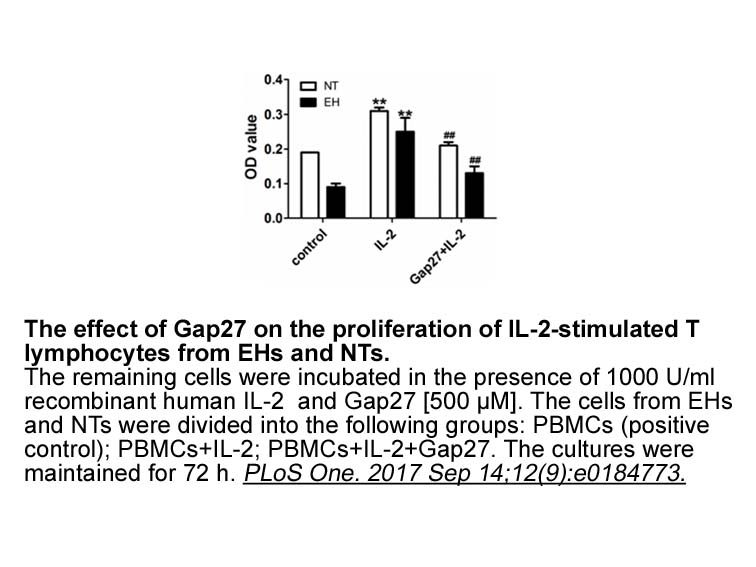
The identification of a gatekeeper pitavastatin also suggests that alternative DDR2 inhibitors may be required to overcome acquired resistance. Additional DDR2 inhibitors that have been isolated include the recently identified alkaloid natural products discoipyrroles A-D and the chemotherapeutic Ac
-
Introduction Quassinoids are natural products formed through
2021-01-07
Introduction Quassinoids are natural products formed through the oxidative degradation of triterpene derivatives with anti-inflammatory, antimicrobial, antineoplastic, and antiplasmodial effects (Chakraborty and Pal, 2013; Houël et al., 2013). They are characteristic ingredients of the family Simar
-
AP20187 This work started from the standard version of
2021-01-06
This work started from the standard version of the CPA model [17] and investigated its known weaknesses: 1) not meeting the defined critical temperature, 2) missing the temperature dependence of pure component saturated liquid densities, 3) using an α function in the cubic term that can provide unre
-
br Allosteric inhibitors In general
2021-01-06

Allosteric inhibitors In general, candidate drugs that bind to a GPCR at a site that is distinct (allosteric site) from the binding site of the endogenous agonist (orthosteric site) are attracting increasing attention 39, 42, 58. Allosteric modulators display saturability of their effect, probe d
-
br Acknowledgments We are thankful to the University of
2021-01-06
Acknowledgments We are thankful to the University of Guilan Research Council for partial support of this work. Introduction It is significant to predict the mass, number and velocity distribution of BAD generated by RHA subjected to penetration of EFP by the thickness of target and the impact
-
It has been reported that
2021-01-06
It has been reported that the ECD of DDRs require dimerization and/or oligomerization for binding to collagen.,, Here, we have established using SPR that antibody-mediated oligomerization of DDR2-Fc significantly enhances its binding to immobilized collagen type 1. Our results are consistent with ea
-
The expression of DDR receptor
2021-01-06
The expression of DDR2 receptor has regulated by numerous types of factors depending upon the cell type. During the osteogenic differentiation, the transcription factorATF4 combined with CCAAT/enhancer binding site in the DDR2 promoter, which is responsible for induction of DDR2 transcription [24].
-
Recently cross talk between DDR and the
2021-01-06

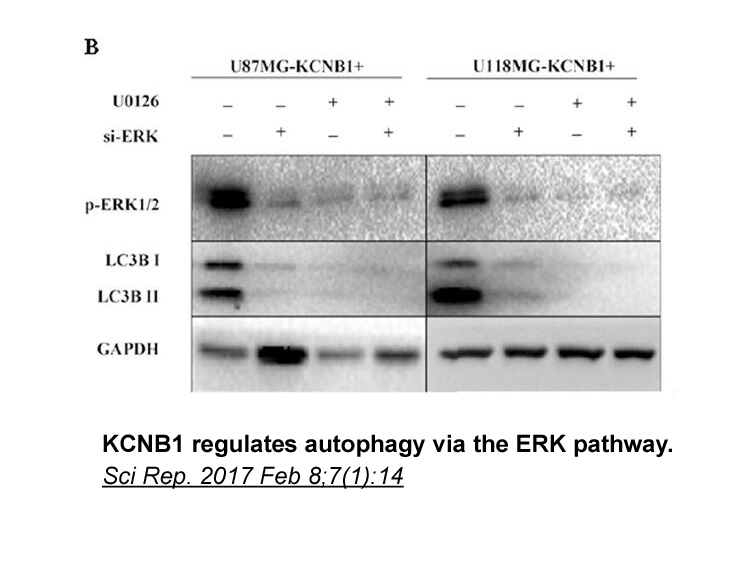
Recently, cross-talk between DDR2 and the insulin receptor and between Notch1 and DDR1 was proposed. Stimulation of cells with collagen I and insulin promotes Tyr740 as well as total tyrosine phosphorylation of DDR2 receptor to a greater extent than the phosphorylation stimulated by collagen I alone
16638 records 794/1110 page Previous Next First page 上5页 791792793794795 下5页 Last page