Archives
- 2026-09
- 2026-08
- 2026-07
- 2026-06
- 2026-05
- 2026-04
- 2026-03
- 2026-02
- 2026-01
- 2025-12
- 2025-11
- 2025-10
- 2025-09
- 2025-03
- 2025-02
- 2025-01
- 2024-12
- 2024-11
- 2024-10
- 2024-09
- 2024-08
- 2024-07
- 2024-06
- 2024-05
- 2024-04
- 2024-03
- 2024-02
- 2024-01
- 2023-12
- 2023-11
- 2023-10
- 2023-09
- 2023-08
- 2023-07
- 2023-06
- 2023-05
- 2023-04
- 2023-03
- 2023-02
- 2023-01
- 2022-12
- 2022-11
- 2022-10
- 2022-09
- 2022-08
- 2022-07
- 2022-06
- 2022-05
- 2022-04
- 2022-03
- 2022-02
- 2022-01
-
En el caso de la
2022-04-02
En el caso de la foliculitis decalvante (FD), se ha publicado un estudio multicéntrico español de 82 pacientes en el que se concluye que el tratamiento que consigue una mayor efectividad (mejora en 15/15 pacientes tratados) y un mayor periodo de remisión postratamiento (7,2 meses) es la combinación
-
Q-VD(OMe)-OPh siRNA construction and transfection For small
2022-04-02
siRNA construction and transfection. For small interfering RNA (siRNA) experiments, we used Stealth™ select RNAi oligonucleotides targeted against GPR120 (Gibco/Invitrogen). The target sequence of siGPR120 used were; sense 5′-AAGUGGGUGCGAUUGACUUGGUCCA-3′ and antisense 5′-UGGACCAAGUCAAUCGCACCCACUU-3′
-
br The glycine transporter GlyT was originally
2022-04-01
The glycine transporter 1 (GlyT1) was originally identified as a member of the solute carrier family 6 of sodium- and chloride-dependent neurotransmitter transporters . GlyT1 is expressed in the central nervous system and in peripheral tissues; mainly in erythroid cells, from erythroblasts in the
-
Cyclosporin D The life cycle of T cruzi
2022-04-01
The life cycle of T. cruzi requires both vertebrate and invertebrate hosts. In the insect (invertebrate) vector, the protozoan undergoes extracellular replication, whereas in the mammalian (vertebrate) host it replicates by obligate intracellular multiplication (Rodrigues et al., 2014). Hence, the p
-
br Materials and methods br Results and discussion
2022-04-01
Materials and methods Results and discussion Conclusion A new label-free targeted methodology using two-step fractionation coupled with conventional microflow LC-MS/MS was developed and validated to profile 54 selected clinically relevant human plasma glycoproteins. The developed method has
-
br Ligand binding free energies In order to
2022-04-01
Ligand-binding free energies In order to compute the absolute free 34450 associated with binding a ligand to a flexible iGluR LBD, a theory that accounts for all the principal thermodynamic contributions from ligand docking and LBD closure had to be developed. This was accomplished using an appro
-
However Gingrich and Hen reported
2022-04-01
However, Gingrich and Hen reported that absence of the gene at all stages of ontogenesis of mice may interfere with the normal developmental program and/or the organism may undergo changes in other systems to compensate for gene absence (46). In addition, potentially altered maternal behavior of GPR
-
br Acknowledgements br Introduction Protein translation dema
2022-04-01
Acknowledgements Introduction Protein translation demands high fidelity. There are number of molecular checkpoints to fulfill this demand. Among these, insuring that a particular tRNA gets aminoacylated by its conjugate amino acid, which in turn is catalyzed by a particular aminoacyl-tRNA synt
-
Moreover the ubiquitous expression of
2022-04-01
Moreover, the ubiquitous chemokine receptor antagonist of the OTR and GHSR was also observed in hippocampal and hypothalamic primary culture, indicating that this expression pattern is likely due to basal activity of these receptors. GPCR trafficking under control conditions has been linked to bias
-
It is widely acknowledged that a significant gap
2022-04-01
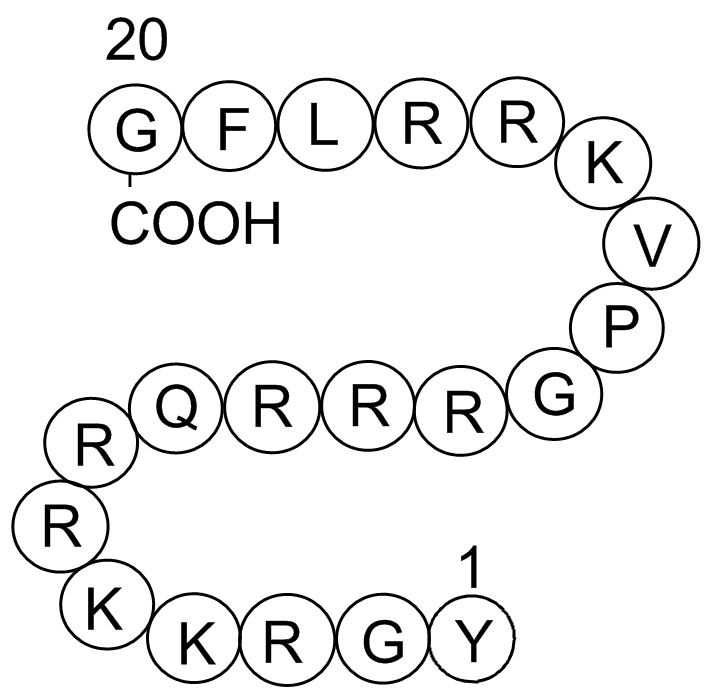
It is widely acknowledged that a significant gap exists between the increasingly detailed knowledge of subcellular mechanisms and the ability to control large-scale anatomy. Radical advances in regenerative medicine require approaches aimed at taming the fundamental complexity of cellular regulation
-
br Conflicts of interest br Acknowledgements This research w
2022-04-01
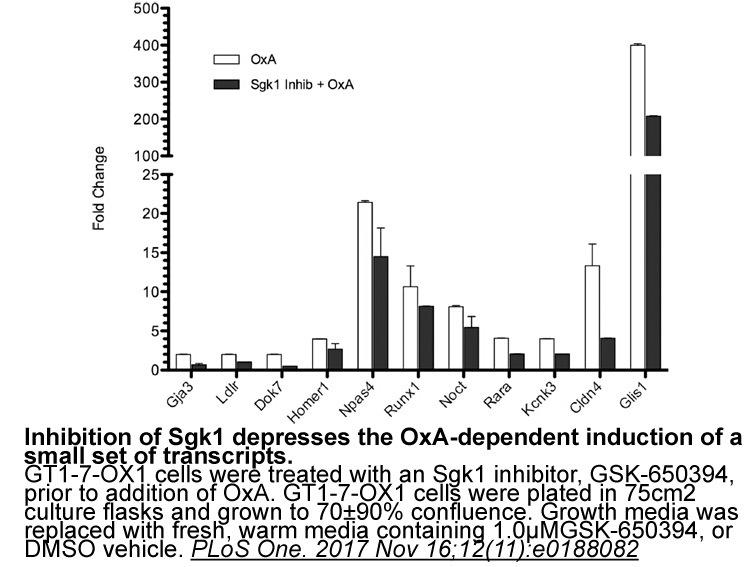
Conflicts of interest Acknowledgements This research was supported by grants from National Research Foundation, Korea (NRF-2017RIDIA3B04033313) and Yeungnam University (216-A-061-042). Introduction Kluyveromyces lactis is a yeast that produces one of the ß-galactosidases (ß-gals) most wide
-
Bile acids BAs are critical
2022-04-01
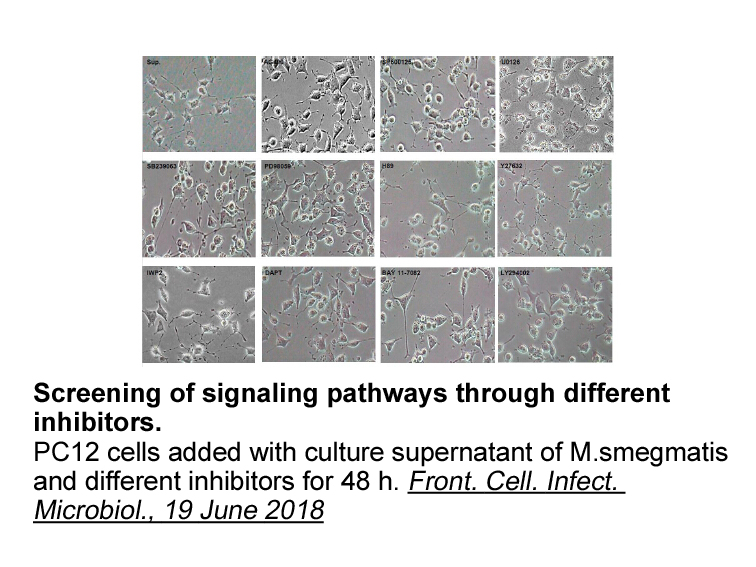
Bile acids (BAs) are critical for facilitating the p 00 of dietary lipids and lipid-soluble vitamins in the intestines [6], [7]. At physiological levels, BAs function as signaling molecules and activate specific nuclear receptors [farnesoid X receptor (FXR), pregnane X receptor, and vitamin D recep
-
The co crystal structure of GPR complexed with TAK provided
2022-04-01
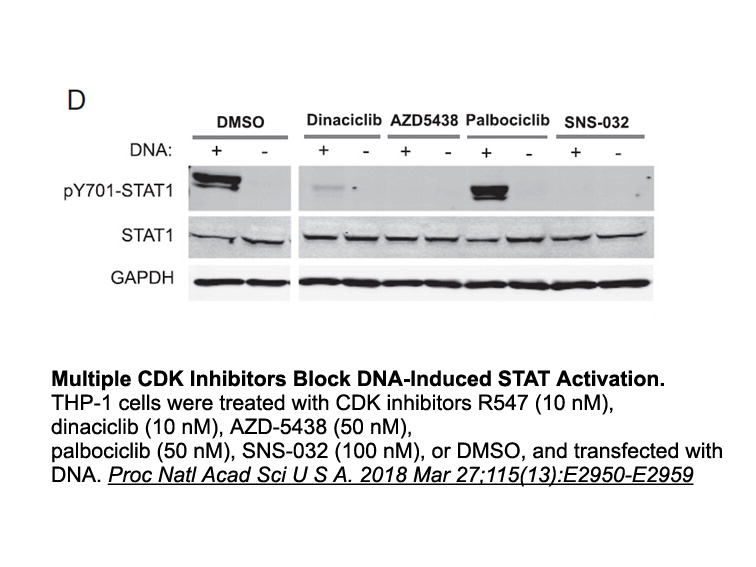
The co-crystal structure of GPR40 complexed with TAK-875 provided precise structural information for the rational design of novel GPR40 agonists. The key interactions between the carboxylate with the residues Arg183, Arg258, Tyr91 and Tyr240 of GPR40 were observed. And Trp174ECL2 was oriented nearly
-
Meanwhile a myriad of studies using tissue
2022-04-01
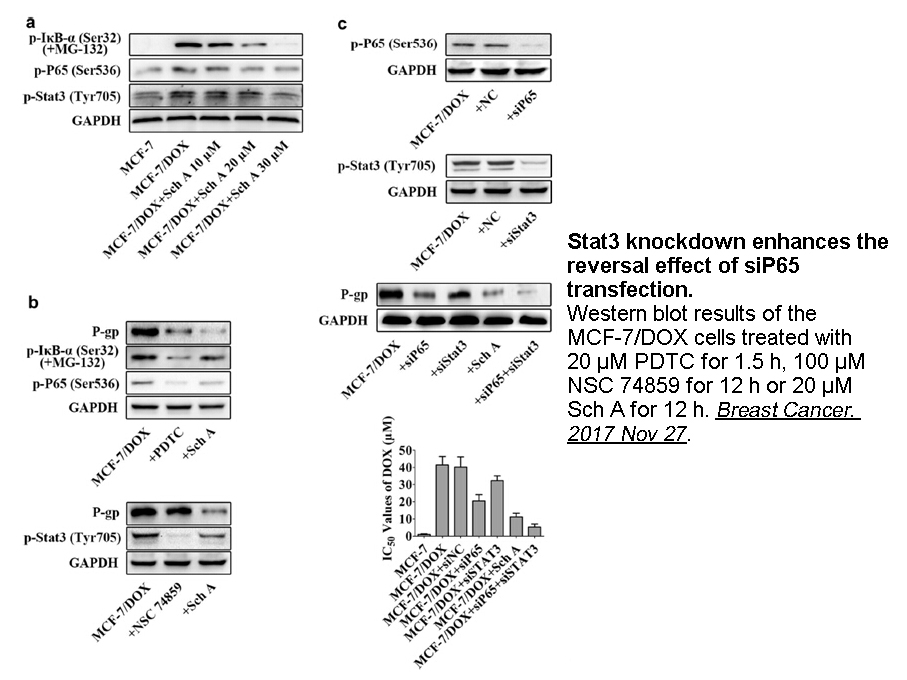
Meanwhile a myriad of studies using tissue- and cell type-specific deletion of GPX4 have provided evidence that various tissues/cells, such as distinct neuronal cell populations including glutamatergic neurons of the forebrain [24], Purkinje cells of the cerebellum [74] and motor neurons [75], photo
-
The membrane metalloendopeptidase MME gene is located at hum
2022-04-01
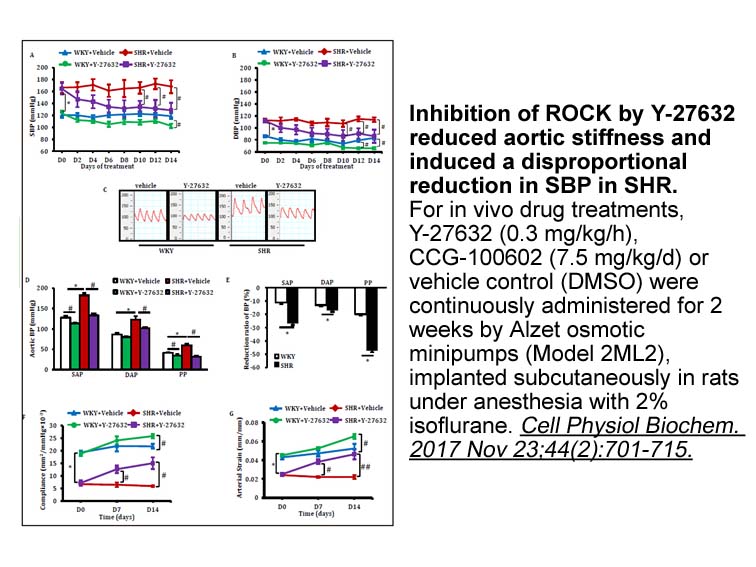
The membrane metalloendopeptidase (MME) gene is located at human chromosome 3q21-27. It encodes a 100-kD type II transmembrane glycoprotein, a widely expressed membrane metalloendopeptidase that degrades a number of substrates. The active site of the enzyme faces the extracellular space. MME is wide
8728 records 527/582 page Previous Next First page 上5页 526527528529530 下5页 Last page